Summarize with
The custom home building process follows a structured sequence that transforms an architectural concept into a finished residence. This progression begins with land acquisition and design, moves through site preparation and structural framing, and concludes with interior detailing and government inspections. Most custom projects require between eight and twelve months of active construction, depending on design complexity and local environmental factors.
Understanding each phase helps you manage expectations and prepare for necessary decisions regarding materials and finishes. WBP Contracting LLC provides this overview to clarify the technical requirements and logistical milestones involved in creating a unique living space from the ground up. By following a logical order of operations, the project stays on schedule and maintains structural integrity throughout the building cycle.
Pre-Construction Planning and Design Coordination
Success in custom construction relies on the work completed before the first shovel hits the ground. This initial phase involves selecting a building site, securing financing, and finalizing architectural plans. You must verify that the land is suitable for your specific design by reviewing zoning laws, setback requirements, and utility access.
Engineering reports are a vital part of this stage. A topographic survey identifies elevation changes on the property, while a geotechnical report analyzes soil stability. Before finalizing your design, reviewing a complete custom home building cost breakdown helps align your budget with actual construction phases, while a geotechnical report analyzes soil stability. These documents dictate the required foundation type and influence the overall project cost. Data from the U.S. Census Bureau indicates that the average time to complete a single-family home has increased due to permit processing and material availability, making early planning more critical than in previous years.
Detailed Construction Phase Breakdown
Physical construction occurs in distinct stages, with each step requiring approval from local building inspectors before the next begins. For a detailed breakdown of how long each phase takes, see our complete home building timeline guide. The following table provides a general timeline and the primary focus for each major construction segment.
| Construction Phase | Estimated Duration | Primary Activities |
|---|---|---|
| Site Work and Foundation | 3 to 5 Weeks | Excavation, footings, slab or basement pour |
| Framing and Exterior Shell | 4 to 8 Weeks | Floor joists, wall studs, roof rafters, windows |
| Mechanical Rough-ins | 2 to 4 Weeks | Plumbing, electrical, HVAC ductwork |
| Interior Finishes | 8 to 12 Weeks | Drywall, cabinetry, flooring, trim work |
| Final Completion | 2 to 3 Weeks | Hardware, painting, landscaping, inspections |
Bonus Tip: Schedule your kitchen appliance and cabinet orders during the framing stage. Lead times for custom cabinetry often exceed twelve weeks, so ordering early prevents delays during the interior finish phase.
Site Preparation and Foundation Assembly
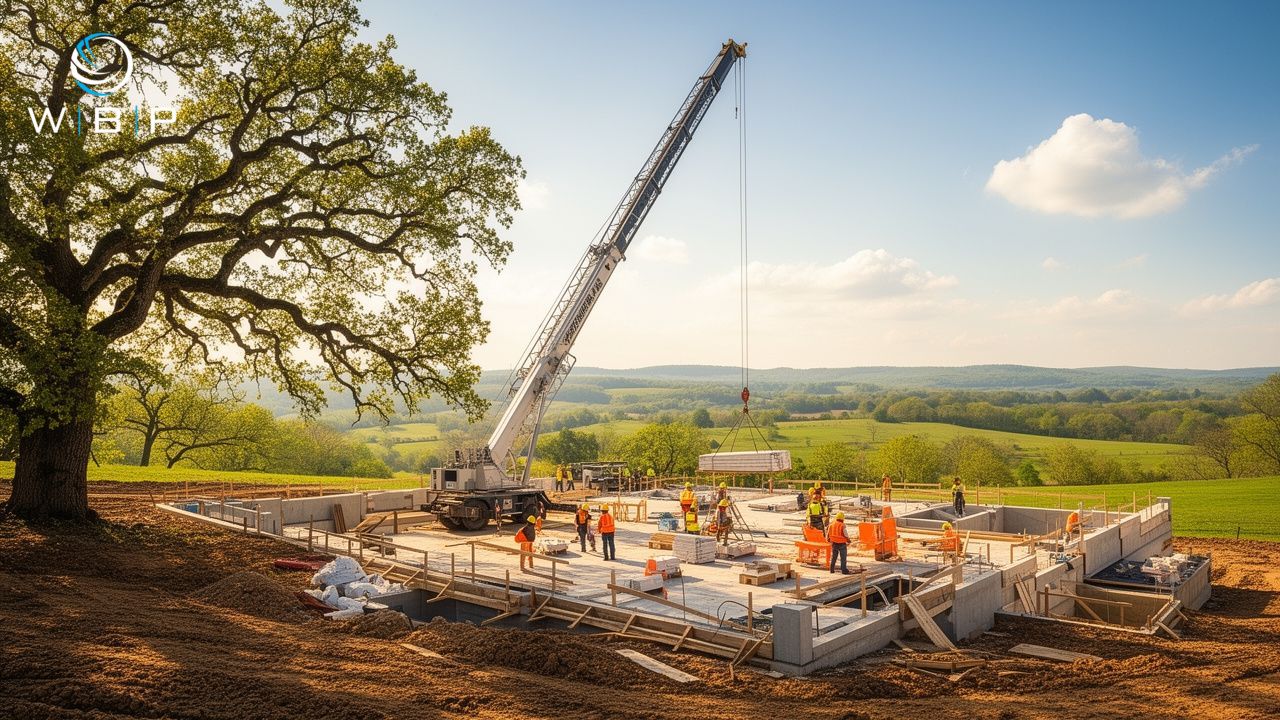
Once the necessary permits are secured, the contractor clears the lot of trees, rocks, and debris. Excavation teams then dig the areas for the footings and the foundation. If the house includes a basement, the excavation will be significantly deeper than for a crawlspace or a slab-on-grade design.
The foundation serves as the base for the entire structure. Workers install wooden forms and steel reinforcement bars to provide strength. After the concrete is poured and cured, crews apply a waterproofing membrane to the exterior of the foundation walls to prevent moisture from entering the home. Proper drainage systems, such as French drains, are installed at this point to direct groundwater away from the structure. Foundation and site work typically account for 15 to 20 percent of total project costs — see our 2026 home construction cost guide for a full budget breakdown.
Structural Framing and Exterior Envelope
The framing stage is when the house begins to take shape. The construction crew builds the floor system, the walls, and the roof skeleton. Modern custom homes often use engineered lumber and trusses to allow for larger, open floor plans. After framing is complete, the crew applies oriented strand board (OSB) or plywood sheathing to the exterior.
Rural sites also need a septic system installed and inspected during site prep, well before framing begins. Establishing a weather-tight envelope is the next priority. Workers install a house wrap to act as a moisture barrier, followed by the roof shingles, windows, and exterior doors. This protects the interior of the structure from the elements, allowing mechanical teams to begin their work inside. According to the National Association of Home Builders, custom homes often feature more complex rooflines and window configurations than production homes, which can extend the framing timeline.
Mechanical Installations and Insulation
Once the shell is protected from the elements, the plumbing, electrical, and HVAC subcontractors begin the rough-in process. They run pipes through the wall studs, install electrical boxes, and place ductwork for the climate control system. These systems must pass a rough-in inspection before the walls are closed.
Following the inspections, crews install insulation to ensure energy efficiency. Options range from traditional fiberglass batts to spray foam or mineral wool. The U.S. Department of Energy suggests that proper insulation and air sealing are the most cost-effective ways to reduce long-term energy expenses in new construction.
Interior Finishes and Functional Details
The interior finishing phase begins with hanging and finishing the drywall. This is followed by the installation of decorative trim, doors, and window casings. Flooring, cabinets, and countertops are then brought into the home. This phase requires significant coordination because multiple trades, such as tile setters, painters, and carpenters, often work in the same spaces simultaneously. Interior finishes represent the most time-variable stage — review our construction timeline guide to plan your move-in date accurately.
The exterior of the home also receives its final treatment during this time. Siding, brick, or stone veneers are applied, and the final grading of the yard takes place. Driveways and walkways are poured once heavy machinery is no longer needed on-site.
Final Inspections and Project Handover
The final stage involves “trimming out” the mechanical systems. Electricians install light fixtures and outlets, while plumbers connect faucets and toilets. After a thorough cleaning, the project manager conducts a walkthrough with the owner to identify any minor defects or required touch-ups, often referred to as a punch list.
A local building official performs a final inspection to ensure the home meets all safety codes. Once approved, a Certificate of Occupancy is issued. WBP Contracting LLC emphasizes the importance of this document, as it officially permits the owner to live in the residence and is required by lenders to finalize construction financing.
Things to Consider Before Making a Decision
Prior to committing to a custom home project, evaluate several environmental and financial factors.
- Soil and Topography: Steep slopes or rocky soil can add tens of thousands of dollars to excavation and foundation costs.
- Utility Proximity: If the land is remote, the cost of bringing electricity, water, or sewer lines to the site can be substantial.
- Zoning Restrictions: Some areas have strict rules regarding the height of the building or the materials used on the exterior.
- Lending Requirements: Construction loans differ from traditional mortgages. As noted by Fannie Mae, these loans usually require more detailed documentation of the builder’s history and a clear project timeline.
Bonus Tip: Hire a private inspector to evaluate the home during the framing and mechanical stages. While city inspectors check for code compliance, a private inspector looks for quality of workmanship and adherence to your specific design goals.
Common Questions About Custom Building
Constructing a custom home involves different logistics than buying an existing house. Owners often wonder about the flexibility of making changes during construction. While changes are possible through “change orders,” they usually result in higher costs and schedule delays once the framing is complete.
Another common inquiry involves selecting a general contractor. You should look for a professional with a history of building the specific style of home you desire. Learn more about our general contractor services in Williston ND and how we manage every phase of your build. If you’re still deciding who to hire, our guide on choosing the right custom home builder walks through the vetting process. Researching local reputations and verifying insurance coverage is a standard part of the selection process.
Frequently Asked Questions
How long does the custom home building process take?
The typical custom home takes between eight and twelve months to build. This does not include the three to six months often required for architectural design and permit approvals before construction starts.
When should I choose my interior finishes?
It is best to select finishes like flooring, cabinets, and tile before construction begins. Early selection ensures that materials are in stock and allows the contractor to provide an accurate total cost for the project.
Can I do some of the work myself?
While some owners handle tasks like painting or landscaping, most construction lenders require a licensed general contractor to manage the structural and mechanical aspects of the build to ensure the loan collateral is protected.
What is a punch list?
A punch list is a document created at the end of the project that lists minor tasks or repairs that need to be finished before the final payment is made. This includes items like paint touch-ups, adjusting cabinet doors, or replacing a cracked tile.
Are custom homes more expensive than production homes?
Custom homes generally have a higher cost per square foot because they lack the economies of scale found in large subdivisions. You are paying for a unique design, site-specific engineering, and individualized material choices.
Final Steps for Future Homeowners
Overseeing a custom home project requires patience and a clear understanding of the construction sequence. By following the stages from site prep to final inspection, you ensure that the structure is built to last. Evaluate your budget, your choice of land, and your contractor carefully before signing a contract. WBP Contracting LLC recommends maintaining a contingency fund of at least ten percent of the total project cost to cover unforeseen site conditions or material price fluctuations. Taking a methodical approach to each phase results in a residence that meets your functional needs and aesthetic preferences.
Information for Planning Your Build
Ready to move forward with your custom residential project? WBP Contracting LLC offers professional oversight as an experienced custom home builder to guide you through every technical requirement of the build process from start to finish.. For more information on starting your project or to discuss your specific site needs, contact WBP Contracting LLC at 406-890-3507. Direct communication ensures that your design goals align with the realities of the building site and local construction codes.
Sources
- U.S. Census Bureau – Provides data on the average length of time required to complete new residential construction.
- National Association of Home Builders – A professional organization that offers industry standards and statistics for residential construction phases.
- U.S. Department of Energy – Offers technical guidance on insulation types and energy efficiency standards for new homes.
- Fannie Mae – Detailed information on the requirements and structures of construction-to-permanent financing.