Skip to content
Summarize with
Choosing a custom home builder in Williston comes down to three things: verified licensing, a portfolio that matches your style, and a contract that spells out timeline and change-order rules before anyone breaks ground. Skip any of these, and you’re the one calling a lawyer eighteen months from now instead of throwing a housewarming.
Williston’s building season is short, its frost line is deep, and its labor force has been largely shaped by the Bakken oilfield boom, meaning the local market isn’t exactly like back in Fargo or Bismarck.
Some crews are already booked eight months out.
Others took on oilfield-boom work, cut corners to meet the demand, and then had to fight to restore their reputations. This article tells you how to tell the difference between the two kinds of contractors, what questions to ask before signing a contract, and where to look beyond the wallet-friendly snapshots of their websites, beginning with this hiring checklist from the National Association of Home Builders that every homeowner should review before hiring anyone to build or remodel their home.
Choosing a Custom Home Builder: The One Factor That Changes Everything
The biggest deciding factor in choosing a custom home builder is not price or even reviews. It has everything to do with whether the builder is actually a custom builder or a production builder pretending to be one.
The National Association of Home Builders advises you not only to shop the companies as you would houses but to look into references, financing, and the level of customization available before signing a contract.
Williston homeowners need to be especially leery of this practice because a production builder primed and ready to snap out a dozen cookie-cutter homes every year will not have the resources or flexibility to accommodate the occasional custom order with special trusses or a different foundation type.
A true custom home contractor builds homes from or with the input of your architect’s plans and understands that design changes alter schedules. The contractor will ask tons of questions before groundbreaking and have no issue discussing the depth of the frost line or how many inches your build site can actually bear.
This is because in north-central North Dakota, an 80+” frost line will change footings and foundation requirements from what you would see in the southern states.
A production(builder) and semi-custom builder will only offer an array of pre-engineered designs and floor plans with only a few options available to upgrade finishes. Not a bad approach for some, but if you are looking for a custom home, this is not the right way.
A good custom home builder checklist should flag a specific roofline, an attached shop, or any other layout detail a plan book simply can’t offer.
Unless you want your home to look like everyone else’s and have few choices, it is best to stay away from a production builder, who typically builds several custom and semi-custom home designs yearly.
Custom Home Builder vs. Production Builder vs. Design-Build Firm
Local building associations and cost-estimate industry websites generally agreed that the primary reason for the discontent among homeowners is that they choose a builder from an inappropriate category instead of a “bad” one, yet here is how the three biggest categories differ after the hard selling has finished.
| Decision Factor | Custom Home Builder | Production/Spec Builder | Design-Build Firm |
| Level of customization | Full, plans built or modified around you | Limited to catalog options | Full, with architecture in-house |
| Timeline flexibility | High; adjusts as design finalizes | Low; schedule is fixed and fast | Moderate; design phase adds time upfront |
| Best fit for | One-of-a-kind layouts, acreage lots | Buyers who want speed and a known price range | Homeowners who want one point of contact |
| ND winter/frost handling | Usually deep local experience | Varies; confirm directly | Usually deep local experience |
| Communication style | Direct with owner or project lead | Often through a sales office | Single team from design to build |
If your lot is a typical in-town parcel and you want one of three or four floor plans the builder now has available, you want a production builder
If you’re building on acreage in Williston and need a design not available from anyone else, you probably want a custom home builder or a design-build company, not a production builder
Hidden Factors That Change the Outcome
Utility hookups are the absolute factor that most homeowners don’t consider. Rural sites in Williston require wells and septic systems from county health departments before foundation plans can be pulled, and that process alone can take an additional 2-3 weeks in some cases if not done ahead of time.
A builder who has worked rural McKenzie County sites before will bring this up in his very first meeting with you. A builder who hasn’t might learn this lesson the hard way right around the same time you do.
Weather sequencing comes into play on a far greater scale than you might expect as well. The window for foundation work and framing in dry-in work is far narrower than in more temperate climates, so a less experienced builder with only a few local jobs under his belt might build his schedule around a general timeline, not the actual conditions he’ll be working in come April or May.
Licensing, Insurance, and Best-Practice Guidelines
Every custom home contractor who works in North Dakota is required to have an active license from the North Dakota Secretary of State; that license should be backed by liability insurance and, if they have North Dakota employees, proof of workers’ compensation coverage through Workforce Safety & Insurance.
This isn’t paperwork you take on faith. The North Dakota Secretary of State’s contractor licensing portal lets any homeowner confirm a contractor is registered and in good standing before signing a contract.
Asking a contractor if they have liability and workers’ compensation insurance is always a good idea. You should ask to see their certificates during your meeting instead of verbal confirmation.
After all, any legitimate custom home builders will have nothing to be ashamed of and hide. A contractor’s hesitation is, in fact, one of the most significant red flags one could come across.
Choosing a Custom Home Builder, Step by Step
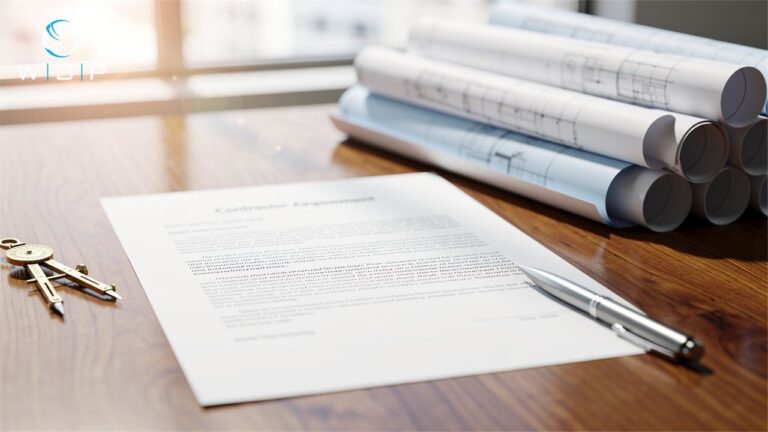
The seven steps below are a ready-made set of questions to ask a custom home builder before you ever sign a contract.
- Establish your must-haves before making any calls, such as a lot size, square footage range, or preferred garage, basement, or first-floor features. This will greatly narrow your search.
- Call upon your local home builders association to come up with a list of active builders within your state. Cross-reference this list by contacting these builders in person or via email. Never rely on what is published on the builder’s own website; check licenses and insurance with your state.
- Ask for two to three completed references with current contact information, and ask them the same questions. Ask for a copy of their change order packets, which should explain in writing how changes to the buyer will be handled.
- When asking for proposals, ask for the same allowances. The total price is only one factor when considering value.
- When speaking with prospective contractors, ask what they have done for other jobs. The best general contractors should be able to describe in detail the change order packet, which should explain in writing how changes by the buyer will be handled.
- Builders who can’t explain it to you in one sentence will undoubtedly “work it out” when the time comes, a sure sign of added expenses down the road.
- Remember to read the fine print, especially the time frame. What are their specific terms for weather or permitting delays?
Bonus tip: Ask them to show you a project that they are working on, not one that is already done. Seeing a house being built lets you see the cleanliness of the jobsite, the quality of the framing, and get a sense of how the crews operate, things you can’t necessarily garner from seeing a completed project in a portfolio.
Common Mistakes Homeowners Make
The most common mistake is hiring a firm based on the most up-to-date and impressive portfolios, without paying attention to how long the company has been operating in the market. According to NAHB guidance, it typically takes 3-5 years for a construction company to become consistently profitable and able to provide the needed guarantees.
A more recent company does not necessarily mean a bad option, but it is essential to ask more questions and have the backup needed in case of failure.
A second common mistake is to skip the reference calls because the builder was so nice in the sales meeting. Sales and execution are two very different skill sets, and the only way to evaluate the latter is by talking with people who have been through the execution process.
A third mistake, specific to the local market, is to assume that any builder who did oilfield housing during the Bakken boom has experience building custom homes.
While man-camp and workforce-housing construction during the Bakken boom has its peculiar challenges, it’s fundamentally different than custom new home construction. It’s a much more standardized process, with many of the same components reused over and over again.
Experience with this type of work can be valuable, but it’s not nearly as relevant as experience with custom-built production homes.
Things to Consider Before Making a Decision
Local track record matters more than national brand recognition.
A builder who has constructed a dozen Williston homes and has an excellent reputation is more desirable than a national builder with no local experience
Your lot’s specific conditions should shape the builder search.
Acreage with wells and septic tanks, in-town infill, and odd gradations on more desirable properties are three examples of jobs that require different skills from your home builder, and these are some of the ways home builder selection tips should differ by region, rather than using a one-size-fits-all approach.
Payment schedule structure protects you as much as it protects them.
A schedule focused around completed construction milestones is better than front-loading the delivery of photographs during the early stages of the project.
Communication style should match how you actually want updates.
Some builders will keep you informed of progress every week, while some will only share photos when you ask. Both are acceptable, but these issues can cause tremendous frustration to homeowners in the middle of a project.
Warranty terms deserve as much scrutiny as the build itself.
Ask what’s covered, for how long, and who handles service calls after the final walkthrough.
Answers to Common Questions
Homeowners who are new to the process have the same questions. One of the most common is how to hire a home builder without any construction background at all, and the best answer is that there is no need for one, thanks to relevant references, licenses, and contract checks.
What’s the difference between a custom home builder and a general contractor?
A custom home builder usually takes a project from design to completion, and typically has an in-house or very close design team. A general contractor may be hired to bring plans you or an architect have designed to life, and typically has less say in the design process itself.
How do I find the best custom home builder for my specific project?
Start by narrowing the search based on builder type, your lot and design needs. Then, cross-check licenses and local references, and compare the value of upgrades versus inclusions in each contract.
Where can I check custom home builder reviews that are actually trustworthy?
Direct reference calls carry more weight than online review sites, since a builder’s own supplied references let you ask specific, project-relevant questions that a star rating can’t answer.
Do I need a lawyer to review a custom home construction company’s contract?
It’s not required, but a short legal review before signing is one of the least expensive ways to uncover vague change-order language or timeline clauses that might come back to haunt you later.
How long does a typical custom build take in this region?
Timelines can vary depending on the project’s scope; the shorter regional building season and foundation-friendly weather mean local custom builds tend to take longer than the same project elsewhere. Ask potential builders for their honest assessment of the timeline rather than an idealized one.
Expert Advice for Williston Homeowners
The homeowners who end up happiest with their builds are rarely the ones who found the sexiest portfolio. They are the ones who treated finding a builder like the biggest job of their year, because that’s what it is.
Check licenses, and call references, and get every allowance and change-order detail in writing before any digging starts. It may make the process a bit less enjoyable, but it will prevent you from living through the disaster that is sure to follow.
Expert Support for Your Project
If you are looking to hire builders, remodelers, or finish-out contractors, WBP CONTRACTING LLC can discuss the details of your project, as well as time frame and finishes.
Contact WBP CONTRACTING LLC at (406) 890-3507 or email wilder@wbpcontractingllc.com to discuss your specific needs. A short conversation up front is usually enough to tell you whether a company is the right fit before you commit to anything in writing.